Biggest health risks compared by industry

No two workplaces are the same – and neither are the risks employees face. From hospital wards to construction sites, factories to office desks, every work environment brings unique challenges that can shape both physical and mental wellbeing.
According to the UK’s Health and Safety Executive (HSE), an estimated 1.7 million workers experienced work‑related ill health in 2023/24, highlighting just how important it is for organisations to prioritise the safety, health and wellbeing of their people.
But which industries are most at risk, and what can employers do to better protect their people? Let’s explore.

Industry-by‑industry: What are the biggest risks?
Health and social care
One of the UK’s largest sectors, health and social care brings both physical and emotional demands. Many employees regularly carry out manual handling tasks, face exposure to infectious diseases, work irregular or night shifts, and operate in high-pressure environments.
HSE data shows high levels of work-related stress, depression and anxiety in this sector, reinforcing the need for robust mental health and wellbeing support, alongside proactive occupational health interventions such as management referrals, immunisation programmes, health surveillance and ergonomic support.
Retail and hospitality
Retail and hospitality roles are fast-paced and customer-focused. Slips, trips and falls are common, particularly in busy kitchens and shop floors. At the same time, long hours and public-facing roles can contribute to stress and fatigue.
Clear procedures, regular training and supportive management can help reduce risks and create safer working environments.

Construction
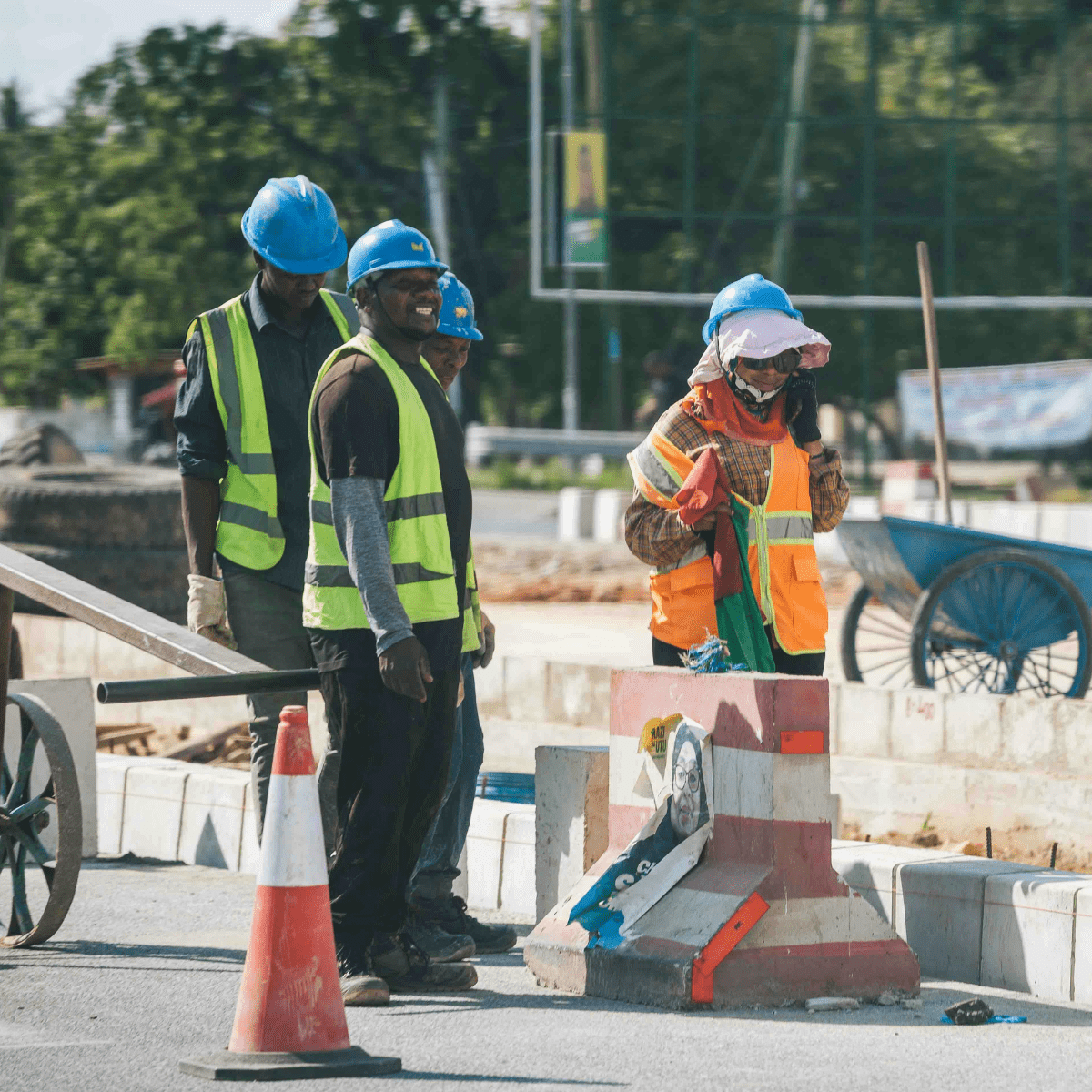
The construction industry remains one of the highest-risk sectors in the UK. Workers face a range of hazards, including operating heavy machinery, working at height and exposure to hazardous materials.
Despite ongoing improvements, construction continues to account for a disproportionate number of workplace fatalities, with falls from height the leading cause. This makes robust safety processes and regulatory compliance essential across all construction sites. Health surveillance and fit to work medicals also play an important role, helping to reduce the risk of occupational illness and ensure those in higher‑risk or safety‑critical roles are medically fit to carry out their duties safely.
Manufacturing
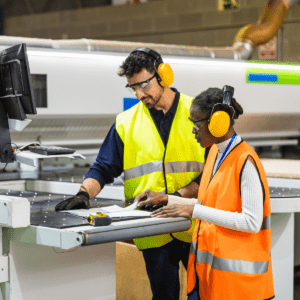
Health and safety in manufacturing settings often centres on machinery risks, repetitive tasks and exposure to noise or hazardous substances. If not managed effectively, these hazards can lead to both immediate injuries and long-term conditions, such as musculoskeletal disorders, work-related noise induced hearing loss, or respiratory issues.
Regular maintenance, training and health surveillance are key to reducing risks and supporting employee wellbeing.

Office-based roles
While often seen as lower risk, office environments still present challenges. Workplace health and safety in office-based roles includes managing posture, screen use and prolonged sedentary behaviour.
Mental health is also a growing concern. HSE statistics show that stress, depression and anxiety account for over half of all working days lost due to work-related ill health in the UK. Office-based roles are not immune, with workload pressures, reduce movement and sustained screen use contributing to both physical and psychological strain.
Regular DSE assessments, ergonomic workstation design, workload management and access to mental health support can all help in reducing these risks and supporting long-term wellbeing.
Preventing and minimising workplace health risks
Health surveillance and monitoring
Health surveillance and monitoring programmes help identify early signs of work-related illness, allowing for timely intervention. This is particularly valuable in higher-risk industries where exposure builds over time.
Risk assessments and workplace controls
Risk assessments remain a core part of workplace safety. Identifying hazards and implementing appropriate control measures significantly reduces the likelihood of incidents and supports ongoing compliance.
Compliance with health and safety legislation
Following legislation, including the Health and Safety at Work Act 1974, is essential. However, leading organisations go further by embedding health and safety into everyday operations and culture.
Training and employee awareness
Providing employees with the right training – whether for manual handling, machinery use or workstation setup – empowers them to work safely and confidently.
Building a culture of wellbeing
A positive workplace culture plays a vital role. Encouraging open conversations, providing mental health support and promoting work-life balance all contribute to a healthier, more engaged workforce.
Take the next step with Medigold Health
Medigold Health supports organisations to manage workplace health in a proactive and effective way. With services ranging from health surveillance and occupational health assessments to mental health support and wellbeing programmes, we help you confidently manage risk, reduce absence and protect your people.
Whatever your industry, our experts work alongside you to strengthen your health and wellbeing approach, helping you build a safer, healthier and more resilient workforce.
The Latest from our Blog…
Check out our blog for all of the latest news, events and updates from Medigold Health.
-

Health surveillance compliance: What UK employers need to know
For employers whose workers are exposed to certain occupational hazards, health surveillance is an important part of protecting employee health and safety and may be a legal requirement. Here, we explain what health surveillance is, when it’s needed and what employers need to do to stay compliant. What is health[...]
Read More -
Getting an OH Assessment: What is the process?
If you’ve been referred for an occupational health (OH) assessment, it’s natural to have questions about what it involves. Understanding the process can help make the experience feel more straightforward. An occupational health assessment is a confidential meeting with an occupational health professional. Its purpose is to understand how a[...]
Read More -
Supporting employee wellbeing when working from home
Remote and hybrid working are now a well‑established part of working life across the UK. From corporate teams and professional services to healthcare providers and fast‑growing tech businesses, many organisations now offer a mix of home- and office‑based work. ONS data quoted by HSE showed that around 38% of workers[...]
Read More