
Can employees refuse a drug and/or alcohol test?

It’s a question we hear a lot: can an employee say no to a drug or alcohol test at work?
Whether testing is being considered after an incident, as part of a routine programme, or because there are concerns about someone’s behaviour, a workplace drug or alcohol test can feel uncomfortable for everyone involved. For employers, it’s about safety and responsibility. For employees, it’s about privacy, fairness and transparency.
Let’s explore.
When might a drug or alcohol test be needed?

A drug and alcohol testing programme is usually introduced to help keep people safe at work, especially in safety critical roles and industries where an incident could lead to accidents or serious harm. Testing can take place before someone starts a role, as part of a random programme, after an incident as part of an investigation, or when there’s reasonable cause to believe someone could be impaired.
Workplace drug and alcohol testing isn’t about blame – it’s about creating a safe working environment which is free from the effects of substance misuse.
Can an employee refuse a test?
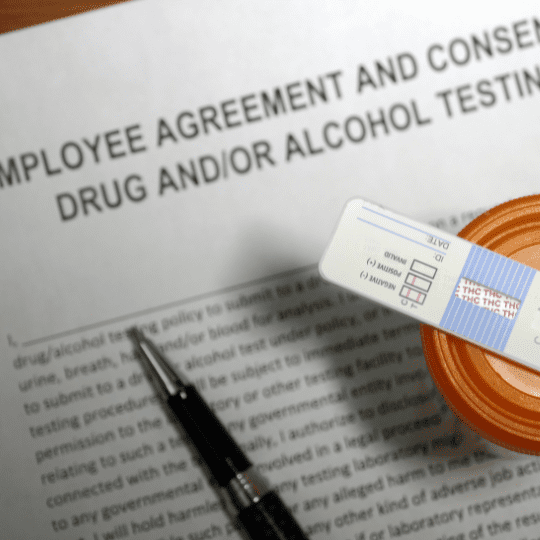
In short, yes – an employee can refuse a drug and alcohol test. Employers can’t force someone to be tested on the spot. Consent matters, and workers’ rights play a big part here.
However, refusing a test doesn’t mean there are no consequences. If testing is clearly written into a contract or workplace policy, and employees have agreed to it, a refusal may be treated in the same way as a positive result. What happens next should always be clearly set out in your policy, so there are no surprises.

Why consent and clarity really matter
Most problems around testing don’t come from the test itself – they come from a lack of awareness around why testing might happen, when it could be required, and what the outcomes could be.
Being open and transparent helps protect workers’ rights and builds trust. When people understand the process, they’re far less likely to see testing as intrusive or unfair.
What should employers do if someone refuses?
If an employee refuses a workplace drug or alcohol test, the response should be calm, consistent and proportionate. In the first instance the employee should be made aware of the implications of refusing a test under the company policy, and then asked to confirm that they still want to refuse the test. In most roles, it may be necessary to temporarily remove someone from their duties to keep everyone safe. In other cases, it may lead to a formal conversation or process.
What’s important is that managers don’t improvise. Following a clear policy ensures decisions are fair and defensible – and helps avoid difficult situations escalating unnecessarily.


Testing works best as prevention, not punishment
The most effective drug and alcohol testing programmes focus on prevention, not punishment. A well-written policy, supported by manager awareness training, helps spot issues early and encourages open conversations before risks increase.
Managers who feel confident talking about drug and alcohol concerns are more likely to support employees in the right way, and therefore less likely to rely on testing as a first response.
How Medigold Health can support you
At Medigold Health, we help organisations put comprehensive workplace drug and alcohol testing programmes in place – ones that protect safety while respecting workers’ rights. Alongside testing services, we also offer drug and alcohol manager awareness training to help managers handle situations confidently, and be able to spot any issues early.
If you’d like to learn more about drug and alcohol testing, policy support, or training for your managers, we’d be happy to help. Get in touch with our friendly team today to find out how we can support a safer, healthier workplace.
The Latest from our Blog…
Check out our blog for all of the latest news, events and updates from Medigold Health.
-

Health surveillance compliance: What UK employers need to know
For employers whose workers are exposed to certain occupational hazards, health surveillance is an important part of protecting employee health and safety and may be a legal requirement. Here, we explain what health surveillance is, when it’s needed and what employers need to do to stay compliant. What is health[...]
Read More -
Getting an OH Assessment: What is the process?
If you’ve been referred for an occupational health (OH) assessment, it’s natural to have questions about what it involves. Understanding the process can help make the experience feel more straightforward. An occupational health assessment is a confidential meeting with an occupational health professional. Its purpose is to understand how a[...]
Read More -
Supporting employee wellbeing when working from home
Remote and hybrid working are now a well‑established part of working life across the UK. From corporate teams and professional services to healthcare providers and fast‑growing tech businesses, many organisations now offer a mix of home- and office‑based work. ONS data quoted by HSE showed that around 38% of workers[...]
Read More