Health screening and health surveillance: what’s the difference?

Health screening and health surveillance are both valuable tools for supporting employee health, but they serve different purposes within the workplace. While the terms are sometimes used interchangeably, in an occupational health context they are not the same.
The key difference lies in what is being assessed, why and when. Understanding this difference can help employers take a more proactive, proportionate and compliant approach to protecting their people.
What is health screening?
Health screening is a proactive intervention used to determine whether an individual is medically fit to carry out a particular role or task, or to establish a baseline of health before exposure to workplace risks.
In the UK, health screening is typically used to identify employees who may be at increased risk in specific working circumstances, even if they are currently well. It focuses, primarily, on health affecting work, rather than on illness caused by work.
Health screening may be carried out:
- Before or shortly after someone starts a role (often known as post-offer or pre-placement health assessments)
- When an employee is moving into a higher‑risk or safety‑critical role
- Periodically, where this is justified by risk assessment or industry guidance
Health screening can include medical questionnaires, role‑specific assessments (such as vision, hearing or lung function tests), and fitness or capability checks relevant to the work being undertaken (for example, fit‑to‑work medicals and screening for safety‑critical activities such as working at height, operating plant or working in confined spaces). It may also involve establishing baseline measurements that can be useful in future health management.
Unlike health surveillance, health screening is not usually a legal requirement under UK health and safety law. However, some roles are subject to industry‑specific regulations or standards that may require medical fitness assessments, and health screening is widely recognised as good practice where it is justified by the demands or risks of the role.
From an employer’s perspective, health screening supports prevention, informed decision‑making and early intervention. Used appropriately, it can help ensure people are placed safely in roles they are fit to perform, identify where reasonable adjustments may be needed, and reduce the likelihood of avoidable harm or work‑related absence.
What is health surveillance?
Health surveillance is a system of ongoing health checks used to identify early signs of work‑related ill health and determine whether workplace control measures are effective. It focuses on work affecting health, rather than on general fitness or wellbeing.
In the UK, health surveillance is a legal requirement where there is a reasonable likelihood that work could cause identifiable harm. It is needed for any employee who is exposed to certain health risks (identified through risk assessment) which cannot be adequately controlled by other means, typically in roles involving exposure to:
- Noise
- Hand–arm vibration
- Respiratory or skin sensitisers, including dust and fumes, or other hazardous substances
- Certain biological or chemical agents
Unlike health screening, health surveillance is not offered universally. It applies only to employees who are exposed to the relevant hazard and must be carried out at appropriate intervals over time.
Surveillance activities are tailored to the hazard, not the job role. For example:
- Audiometry (hearing testing) for those exposed to excessive workplace noise
- Lung function testing for those exposed to respiratory hazards
- Skin checks for those coming into contact with sensitisers or irritants
The purpose is early detection (identifying changes in health before they become serious) and assessing whether controls are working or further action is required.
A workplace example
To illustrate the difference, consider a manufacturing organisation with employees in a range of roles, including office-based staff, factory floor workers and warehouse and transport teams.
Health screening
As part of its recruitment and workforce management processes, the organisation conducts health screening for all new starters, to assess general fitness for work and identify any health conditions that may require workplace adjustments.
It also carries out fit-to-work assessments at key points, such as on recruitment or following long-term sickness absence, for employees in safety-critical roles (for example, those operating telehandler equipment or heavy vehicles), to ensure they are medically fit to perform higher-risk work safely.

Health surveillance
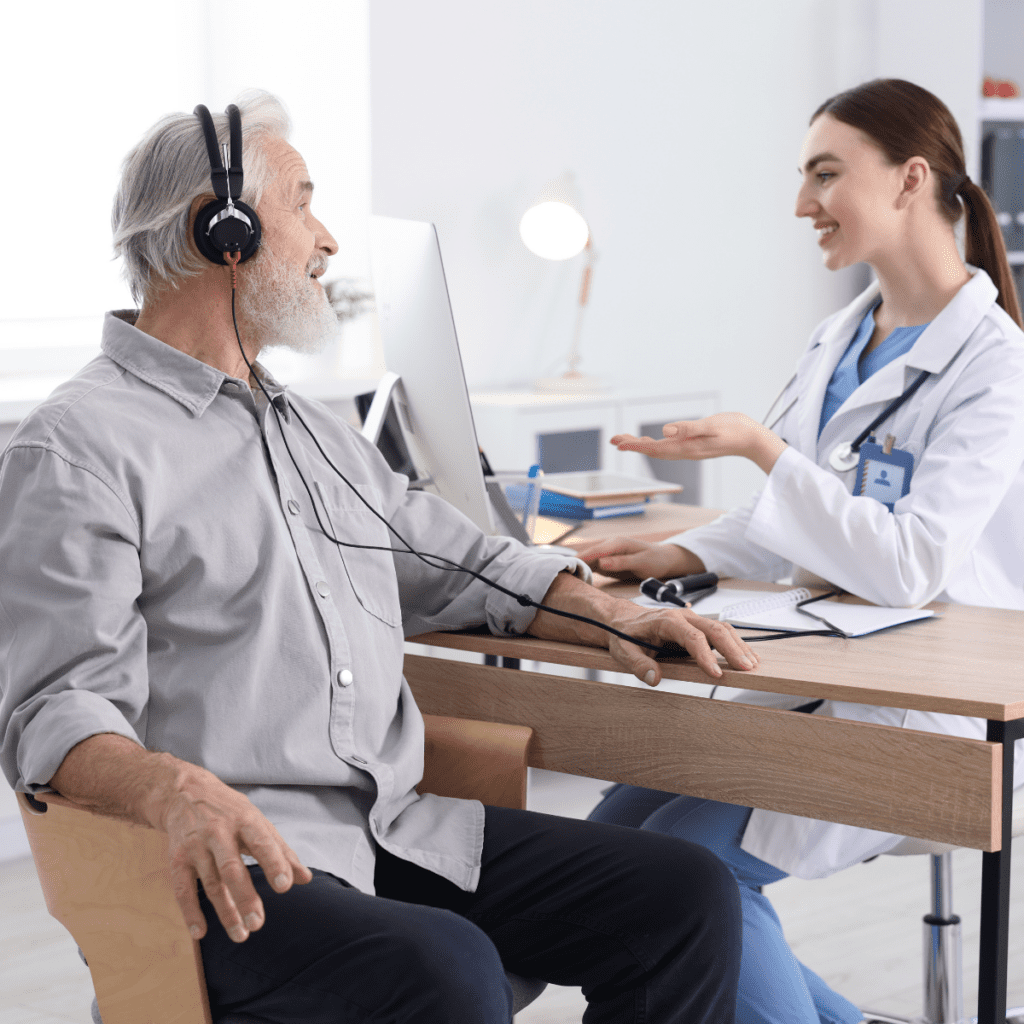
Separately, the organisation runs a health surveillance programme specifically for employees in roles that involve regular exposure to hazardous noise, as identified by risk assessment. The programme includes baseline and periodic hearing tests carried out at defined intervals to check for early signs of noise-induced hearing loss.
This scenario shows the difference clearly. Health screening is used by the organisation to inform placement and workplace management decisions and is applied more broadly across the workforce, based on organisational policy, employment stage or role, rather than exposure to a specific hazard.
The health surveillance checks, by contrast, are targeted at a specific group of employees, driven by identified occupational hazards, legally required under health and safety legislation and designed to protect employees’ health by monitoring the effects of exposure over time.
Health screening vs health surveillance at a glance
While both involve some form of health assessment, their purpose and use are very different:
- Health screening
- Preventative and fitness‑focused
- Used to assess suitability for work or establish baseline health
- Usually non‑statutory (outside specific industry regulations)
- Concerned with health affecting work
- Health surveillance
- Hazard‑specific and ongoing
- Required by law in defined circumstances
- Triggered by risk assessment and residual exposure
- Concerned with work affecting health
Why the distinction matters – and why both are important
Understanding the difference between health screening and health surveillance helps employers apply the right intervention at the right time.
Health screening, when used appropriately, supports prevention, informed role placement and early intervention. Health surveillance ensures legal compliance and protects employees from occupational harm.
Confusing the two can lead to gaps in compliance, missed health risks, oversurveillance or unnecessary referrals. Together, however, they support a structured, risk‑based approach to occupational health, each playing a distinct role in helping employers protect individuals from illness and injury, manage risk effectively and meet their legal responsibilities under health and safety legislation.
Take the next step
If you’re looking to strengthen your approach to workplace health, understanding the distinction between health screening and health surveillance is a good place to start.
Whether you need support introducing appropriate health assessments or managing hazards in the workplace in line with legal requirements, clear, proportionate occupational health advice can help you make informed decisions and reduce risk with confidence.
To learn more about the support Medigold Health can provide, get in touch today.
The Latest from our Blog…
Check out our blog for all of the latest news, events and updates from Medigold Health.
-

Health surveillance compliance: What UK employers need to know
For employers whose workers are exposed to certain occupational hazards, health surveillance is an important part of protecting employee health and safety and may be a legal requirement. Here, we explain what health surveillance is, when it’s needed and what employers need to do to stay compliant. What is health[...]
Read More -
Getting an OH Assessment: What is the process?
If you’ve been referred for an occupational health (OH) assessment, it’s natural to have questions about what it involves. Understanding the process can help make the experience feel more straightforward. An occupational health assessment is a confidential meeting with an occupational health professional. Its purpose is to understand how a[...]
Read More -
Supporting employee wellbeing when working from home
Remote and hybrid working are now a well‑established part of working life across the UK. From corporate teams and professional services to healthcare providers and fast‑growing tech businesses, many organisations now offer a mix of home- and office‑based work. ONS data quoted by HSE showed that around 38% of workers[...]
Read More